Dive sites
Koh Haa vs Koh Bida: Which Dive Trip Suits You?
Two different island settings, both worth exploring. Choose around your experience and the day's conditions.
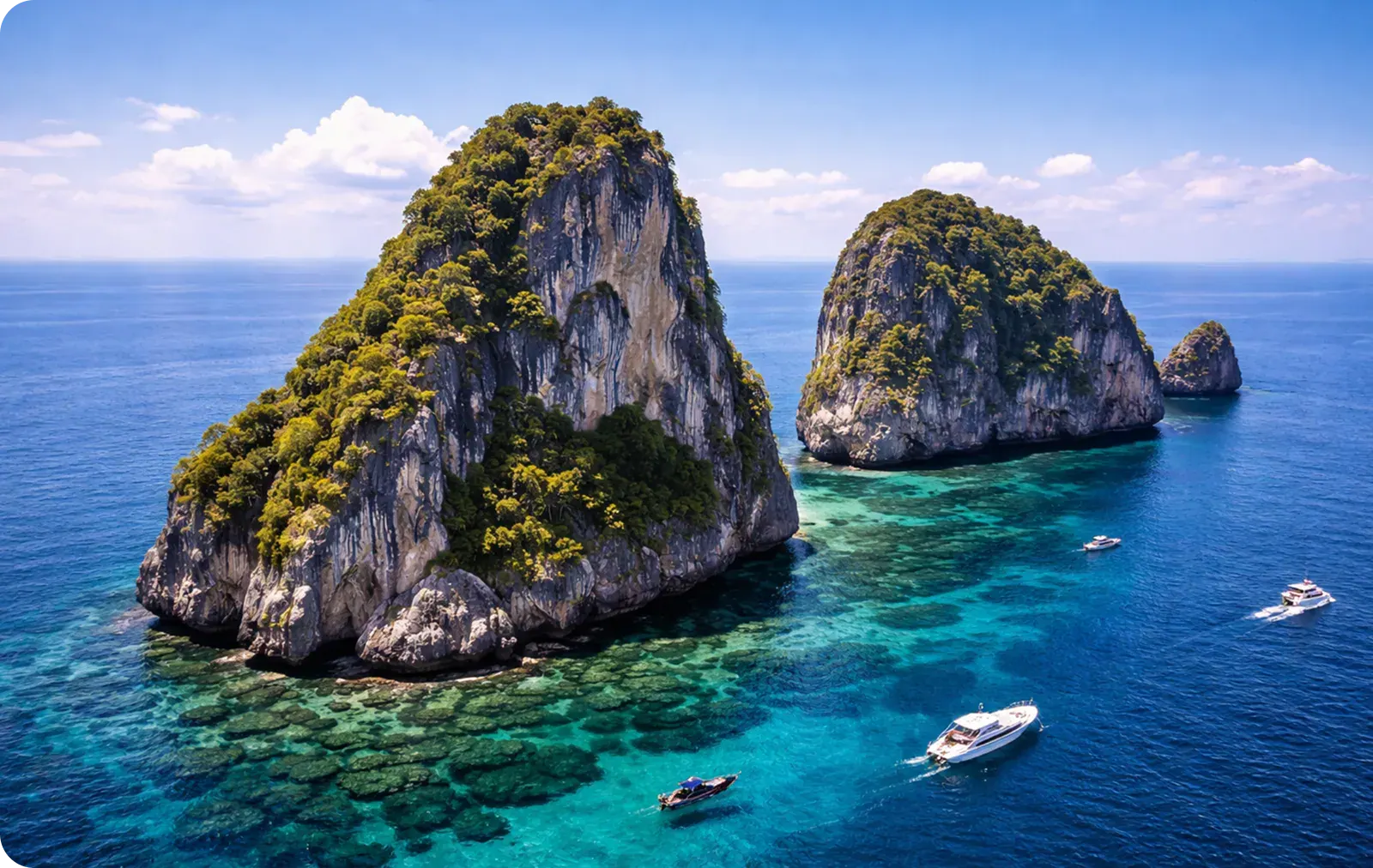
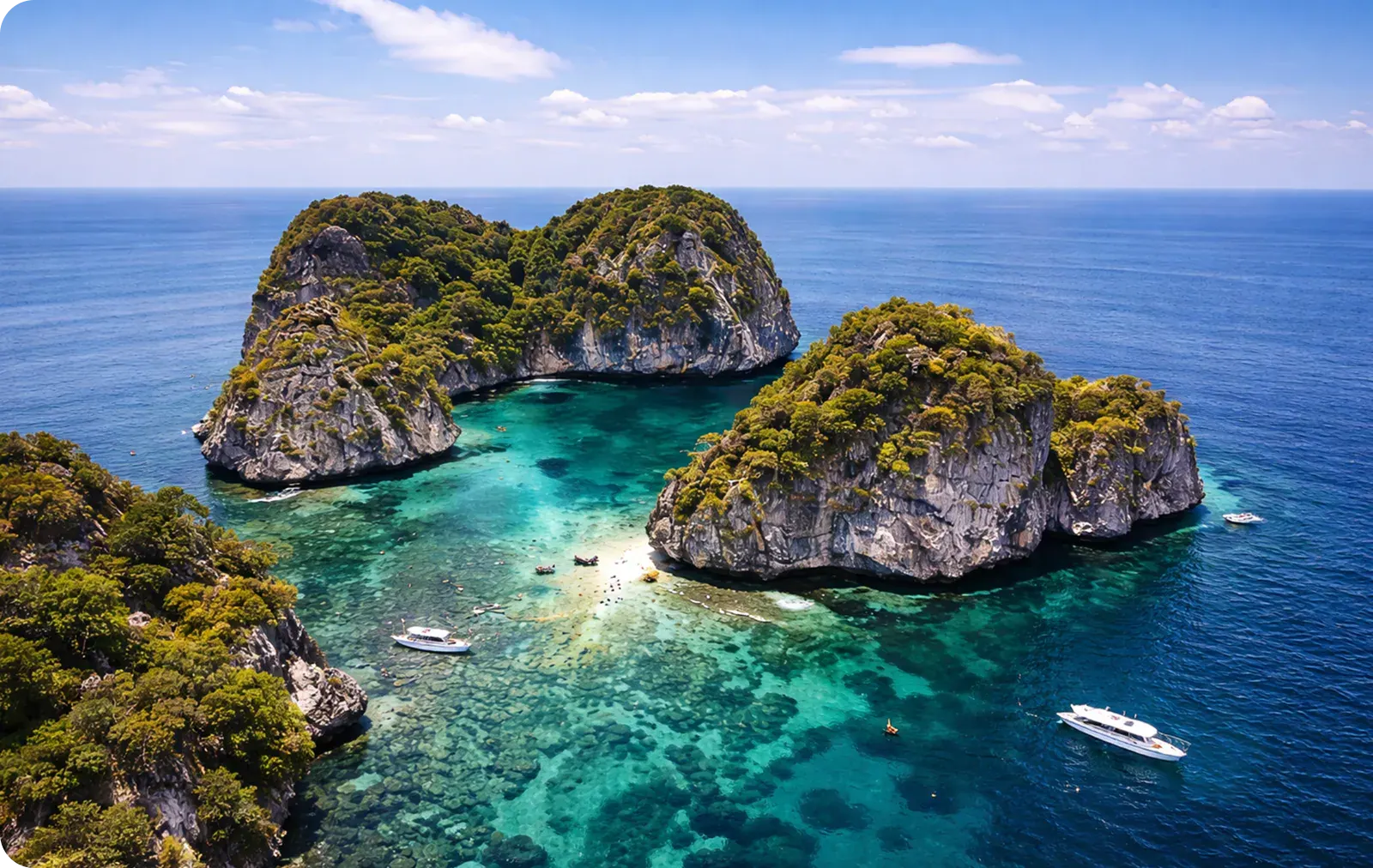
Koh Haa and Koh Bida are both options for diving trips from Koh Lanta. Koh Haa is a small limestone island group associated with a lagoon, reef slopes and varied rock formations. The Bida islands, near Phi Phi, offer a different combination of walls, reef and boulders.
Neither name alone tells you whether a particular dive is right for you. The chosen site, current, visibility and your recent experience matter more than a simple ranking. Use the comparison to explain your preferences, then let the team check a suitable route.
Start with the kind of day you want
These are broad differences between areas, not a promise of conditions at every site. A boat trip can include several dive locations, and the plan can change on the day.
| Question | Koh Haa | Koh Bida / Phi Phi area |
|---|---|---|
| What setting interests you? | An island group with lagoon and reef scenery | Rocky islands, walls and reef near Phi Phi |
| Are you newly certified? | Ask for suitable sites and depths | Ask for suitable sites and depths |
| Are you an experienced diver? | Discuss the specific route and conditions | Discuss the specific route and conditions |
| Do some guests want to snorkel? | Confirm whether that day's route suits them | Confirm whether that day's route suits them |
Consider Koh Haa for its varied island landscape
The appeal of Koh Haa is the change of scenery around a compact island group. A lagoon photograph gives only one view of the area; reef slopes and exposed sides can feel quite different. Our Koh Haa guide explains why the exact site matters.
The area's famous cavern imagery should not become an expectation that every guest will enter an overhead environment. Discuss any particular interest with the team, and keep the actual plan appropriate to your training and the conditions.
Consider Koh Bida for a different reef setting
The Bida islands sit south of the main Phi Phi islands. They can appeal if you enjoy watching life around rocky features and reef edges. Ask which parts of the route the operator plans to visit rather than assuming every trip described as Phi Phi goes to exactly the same places.
Marine life moves freely between habitats. A photograph of a shark or turtle is an illustration of an encounter, not something included in a ticket. Choose a route you would enjoy for the reef and the whole diving day, even if a hoped-for animal does not appear.
Let experience and conditions decide the final match
For a newly certified diver, recent practice, comfort on a boat and how you manage your equipment are useful details to share. For an experienced diver, describe the environments you enjoy and your recent dive history. An advanced card by itself does not describe how ready you feel today.
If you have been out of the water for a while, read our returning-to-diving guide before choosing a destination. You may enjoy the trip more after a refresher and an easier first day.
Compare the complete trip, not just the island name
Look at the current scuba routes for the dive count, listed prices and separate fees. Confirm the planned departure and return, equipment, guide arrangements and hotel pickup for your accommodation. Travel times depend on the boat, sea and starting point, so a number on another operator's website may not describe your day.
For a mixed group, ask whether the actual route can accommodate both activities. You can compare snorkeling and scuba with your travel companions first. Agreeing on a suitable day together is more useful than trying to select a universal winner between the two areas.
Sources & further information
Program and travel sources checked on 10 November 2026. Confirm current arrangements with the team before booking.
Compare our Koh Lanta dive trips
See the routes and current prices, then ask which trip fits your experience and dates.